
March 26, 2026
Second-Generation Ethanol—a Milestone in Brazil’s Energy Transition
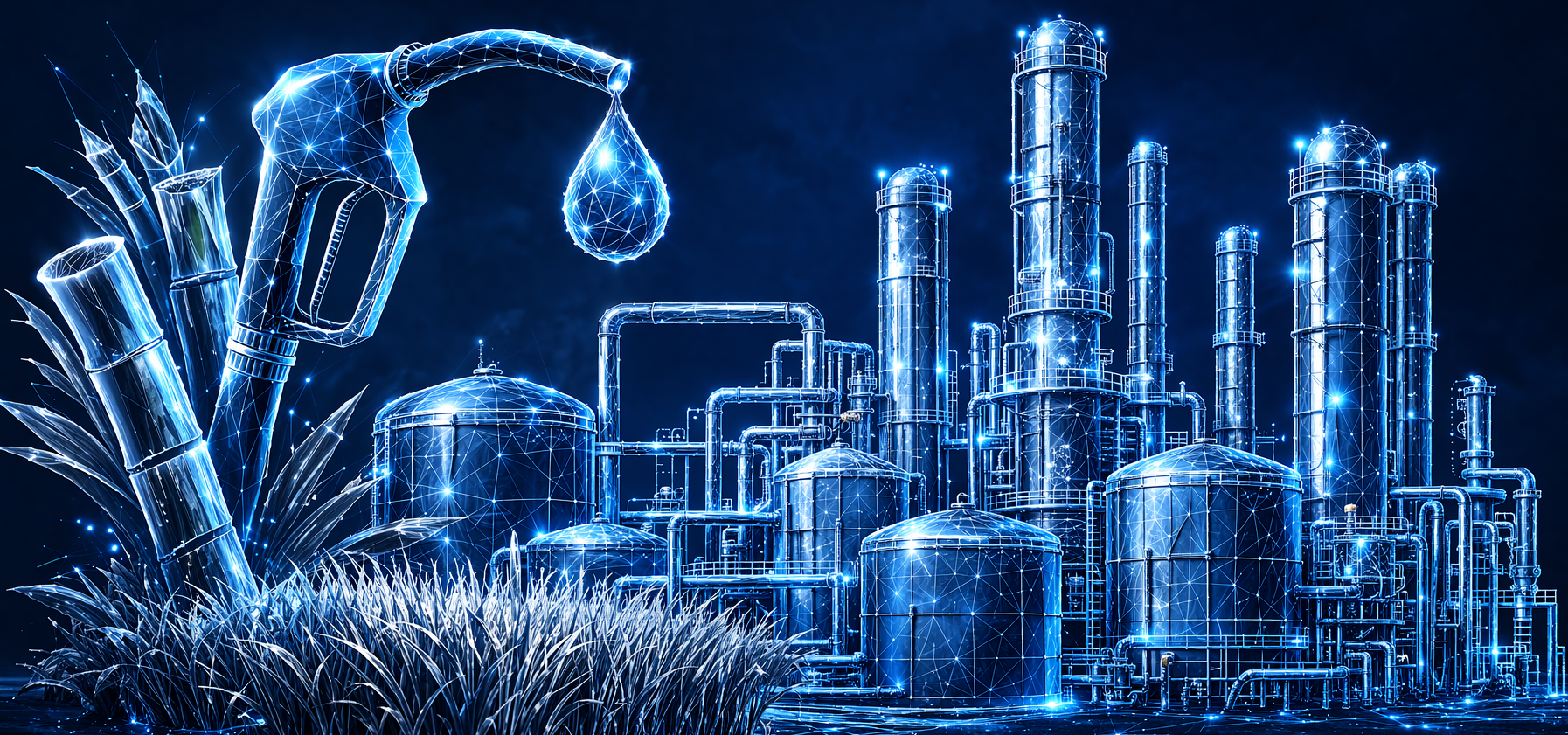
Brazil is impressively demonstrating how decarbonization, economic growth, and sustainability can go hand in hand. The country is focusing on second-generation ethanol to diversify its biofuel mix. This is where Pepperl+Fuchs contributes with industrial communication technology, supporting the construction of new bioethanol plants as a technical partner.
For decades, Brazil has been one of the countries with the highest use of renewable energy worldwide. In 2024 and 2025, approximately 88% of the electricity generated came from renewable sources, primarily hydropower. This puts Brazil at the forefront of industrialized nations worldwide. This is made possible by the country's abundant natural resources, such as hydropower, wind power, solar energy, and plant-based energy carriers such as sugar cane and corn. As the country with the largest rainforest and the world's most water-rich river, Brazil is well aware of its key role in global carbon action. It is therefore no surprise that Brazil hosted the 30th United Nations Climate Change Conference (COP30) in 2025 in Belém, a metropolis of over one million people on the edge of the Amazon region.
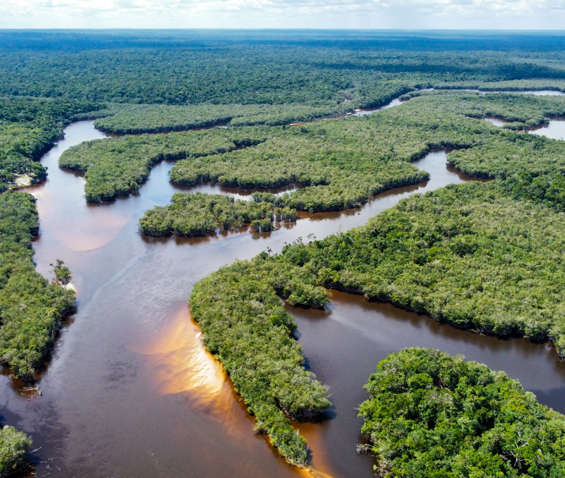
The Amazon rainforest is the largest tropical rainforest on Earth and has the greatest biodiversity of any tropical forest. Most of the rainforest, around 60 percent, is located in Brazil. It is traversed by the Amazon, the world's largest river in terms of water volume, with a length of 6,448 km.
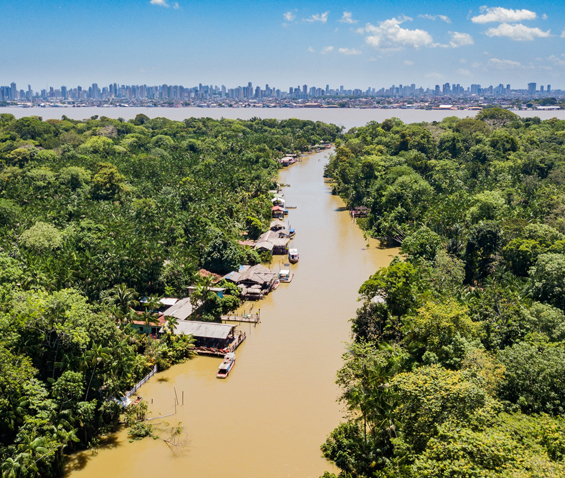
Where the Amazon Rainforest meets a metropolis of millions: The city of Belém is located in northern Brazil, right on the Amazon River—the rainforest is just a river crossing away. In 2025, the city hosted the COP30 World Climate Conference.

Rio de Janeiro is probably Brazil's best-known city internationally. With its landmarks, the statue of Christ the Redeemer, Sugarloaf Mountain, and its famous beaches such as Copacabana and Ipanema, the city is a symbol of Brazilian culture and joy of life.

The São Paulo metropolitan area is the economic and financial center of Brazil. It is also the largest industrial conurbation in South and Latin America.

The impressive Iguaçu Falls, located in the national park of the same name, consist of more than 270 individual waterfalls, situated right on the border between Brazil and Argentina. Due to their enormous size, they are considered one of South America’s most spectacular natural wonders.

Colorful Carnival parades and lively samba rhythms—that’s Brazil, too.

From an economic perspective, Brazil is much more than that: It is the largest economy in Latin America and ranks among the ten largest economies in the world.
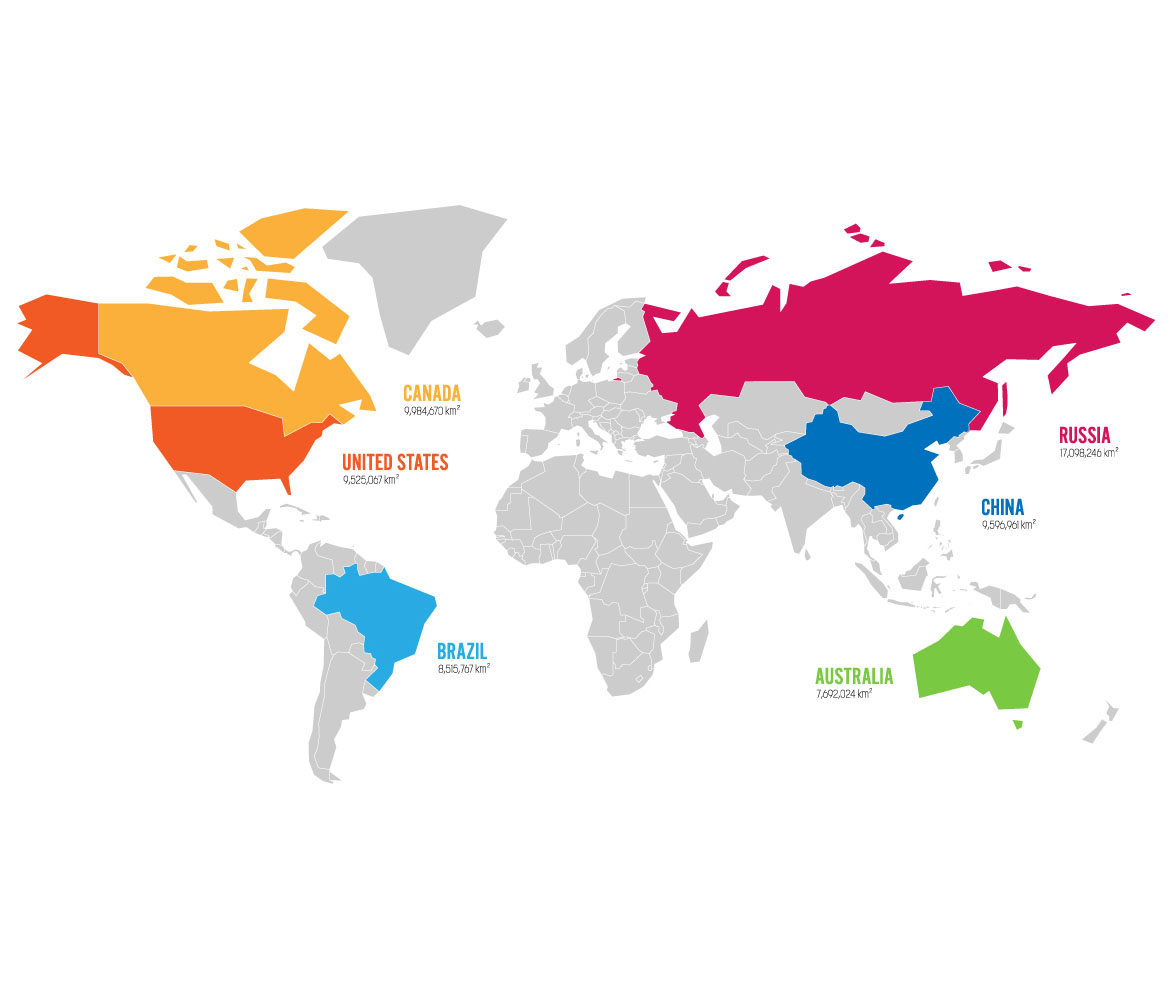
In terms of land area, the country is also the largest in Latin America, covering 8.5 million square kilometers, and the fifth-largest in the world, behind China and the United States.
Brazil is now one of the leading nations committed to sustainability in industrial development and decarbonization. As a partner country of Hannover Messe 2026, the country is impressively demonstrating how this can be achieved.
Economic Growth Through Sustainability
“Brazil combines natural resources, industrial capacity, and political foresight, enabling it to play a pioneering role in the global energy transition,” explains Patricia Guerrero, Area Sales Manager at Pepperl+Fuchs Brazil. The Brazilian government is pursuing a long-term policy of a holistic, diversified approach to power generation, in line with sustainability in economic development and the decarbonization of industry and transport. The Nova Indústria Brasil (NIB) government initiative, launched in 2024, focuses on reducing industrial CO₂ emissions by 30% and increasing the share of biofuels and electric vehicles by 50% by 2033. Additional programs to decarbonize the transportation sector, such as RenovaBio and “Fuel of the Future,” create regulatory frameworks and promote the integration of biofuels into the energy mix through incentives.
Biofuels—Ethanol Then and Now
The use of ethanol as a fuel is not new. As early as 1860, Nikolaus August Otto used ethanol in his early prototypes for internal combustion engines before developing the four-stroke engine named after him, which ran on gasoline. Even the widely used Model T, with which Henry Ford revolutionized automotive mass production at the beginning of the 20th century, could be powered not only by gasoline but also by ethanol without any problems. Even back then, the visionary car manufacturer Ford saw bioethanol as the fuel of the future and was convinced of the sustainability of the use of agriculture as a fuel supplier. Ethanol and bioethanol are chemically identical, differing only in their production and raw material source. Bioethanol is obtained exclusively from sustainable biomass, while ethanol is produced synthetically from fossil raw materials.
For more than 20 years, the automotive industry in Brazil has been focusing on vehicles with so-called flex-fuel engines (FFV, flexible fuel vehicles), which can be fueled with different proportions of ethanol. It was the German automotive group Volkswagen that was the first to offer its local best-selling model “Gol” with flex-fuel technology in 2003. By 2024, around 79% of all vehicles on Brazilian roads were already running on ethanol-gasoline blends containing up to 85% bioethanol (E85). By comparison, in Germany and Europe, the most common gasoline blends contain just 5% (E5) and 10% (E10) bioethanol, respectively. Electric mobility, on the other hand, has played only a very minor or negligible role in Brazil to date. Less than 3% of registered vehicles are purely electric.

Brazil’s Sustainable Transportation Transition—Biofuels from 2G Ethanol
Brazil's main focus in decarbonizing the transport sector is on biofuels produced from second-generation ethanol, also known as cellulosic ethanol or 2G ethanol for short. What makes it special is that compared to first-generation bioethanol, which is obtained directly from sugar cane or corn, 2G ethanol uses only plant waste and agricultural residues such as sugarcane bagasse, corn stover, and cellulosic biomass.

“Diversifying the biofuel mix with second-generation ethanol is a central component of Brazil's decarbonization strategy,” says Patricia Guerrero. Brazil's bioethanol production is integrated into a sustainable circular model in which the entire plant is used for both bioenergy and food production. Only the starch component is used for ethanol production, while the proteins and fiber are processed into animal feed.
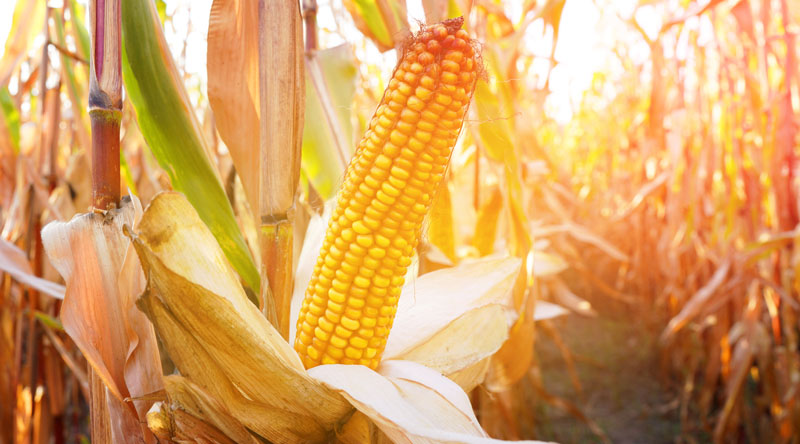
Biofuels produced from second-generation ethanol are made exclusively from plant waste and agricultural residues such as corn stover, sugarcane bagasse, and cellulosic biomass.
Technical Partner for Modern Biorefineries
Capacity for the production of second-generation ethanol is currently being expanded. The new bioethanol plants, known as E2G plants for short, are strengthening Brazil's leading role in the fields of sustainability in power generation and biofuels. These plants are essentially modern biorefineries in which the raw materials are first crushed, liquefied, and saccharified. In the next step of the process, fermentation, yeast ferments the sugar into ethanol. The ethanol is then separated from the water during distillation and processed.
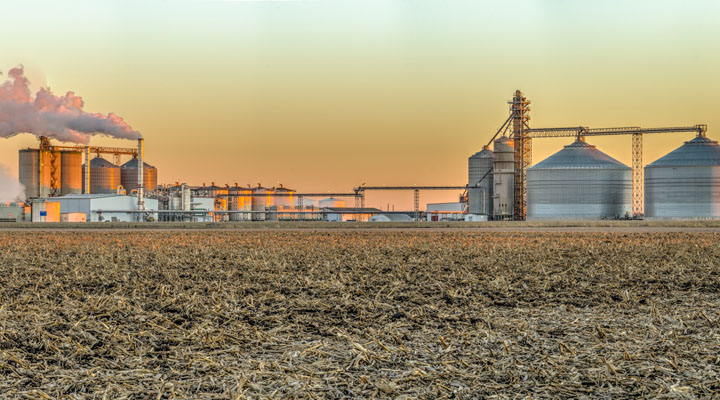
An ethanol plant producing biofuels
Potentially explosive atmospheres can arise during the processing of biomass and the production of bioethanol. Reliable explosion protection in the process plants is therefore essential. Pepperl+Fuchs not only provided support as a component manufacturer and technology provider for explosion protection, but also impressed as a reliable, strategic partner for the automation of complex, safety-critical processes. Through technical differentiation and close cooperation with the engineering and procurement teams of a well-known Brazilian E2G plant manufacturer, Pepperl+Fuchs succeeded in clearly distinguishing itself from its competitors during the specification phase.

Brazil’s First E2G Plant—from Requirements to Challenges
When planning a bioethanol plant, it is not only the right process technology that is crucial. The choice of automation and communication infrastructure is equally critical. It reliably connects sensors, actuators, and process instrumentation to the control and management level.
“Pepperl+Fuchs' involvement began in the early planning phase of Brazil's first E2G plant, where we gained deep technical insights into the operational challenges of 2G ethanol production,” reports Felipe Fernandes, Sales Executive at Pepperl+Fuchs Brazil. The goal was to connect field devices efficiently and securely to the higher-level control and management system. “The requirement was for a scalable and robust communication infrastructure that supports increasing production capacities, is secure, and at the same time reduces operational complexity. The focus was on high network availability, easy installation, fast commissioning, and low maintenance,” says Rafaela França, Product Coordinator, outlining the customer's requirements.
The long distances within the plant, harsh ambient conditions, and explosion-hazardous areas required a well-thought-out concept. Together with the customer, Pepperl+Fuchs developed an integrated communication architecture that was convincing.

Efficient Field Wiring Meets Proven Process Communication
A combination of AS-Interface technology and FieldConnex® fieldbus infrastructure for PROFIBUS PA proved ideal for the E2G project. AS-Interface ensures economical and lean field wiring, while PROFIBUS PA offers proven process communication. The flexible and scalable communication architecture enables seamless integration of the field, control, and management levels.
AS-Interface provides efficient connectivity at the field level. The components enable stable communication between sensors, actuators, and the controller. AS-Interface repeaters with active terminators extend the detection range and stabilize signal transmission, even over long distances.
PROFIBUS PA is used for process instrumentation. The reliable fieldbus topology ensures smooth digital data communication between the plant and the control system and also provides power to all field devices. Powerful FieldConnex® fieldbus Segment Protectors protect individual network areas and reliably isolate faults. The PROFIBUS PA components ensure reliable and safe communication in demanding environments and explosion-hazardous areas. Combustible materials and potentially explosive atmospheres play a central role, especially in biomass processing and ethanol production. The selected PROFIBUS PA architecture supports safe operation and consistently meets the relevant requirements.
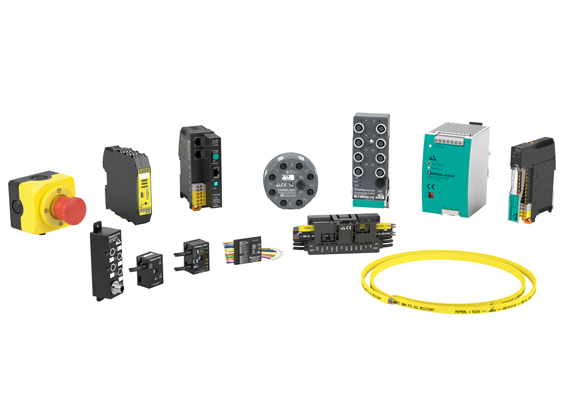
An AS-Interface system provides efficient connectivity at field level, enabling stable communication between sensors, actuators, and the controller.
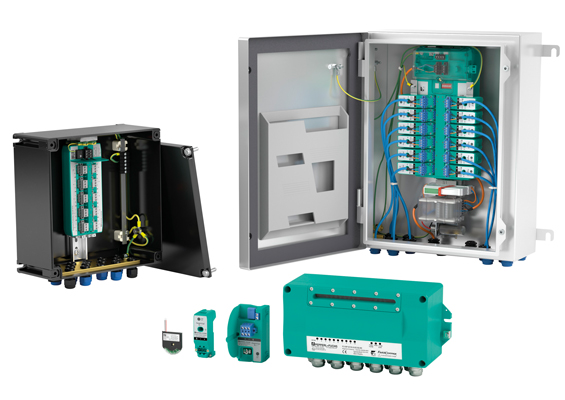
Pepperl+Fuchs FieldConnex® fieldbus infrastructure for PROFIBUS PA ensures smooth digital data communication between the plant and the control system.
The concept was convincing not only from a technical standpoint, but also from an economic one. “The results are clearly measurable: we have high network availability, integration and commissioning were faster than planned, and the cabling structure is less complex. Thanks to LED diagnostics and a modular design, maintenance is also simple and efficient,” summarizes Diego Azevedo, Regional Sales Supervisor at Pepperl+Fuchs Brasil.
Due to the compatibility of the PROFIBUS PA architecture with Ethernet-APL technology, the system can also be converted to fast, digital signal transmission for large amounts of data in a future-oriented manner. This makes economically scalable expansions easy as production capacities grow.

Cooperative Partnership Pays Off
From the outset, the project was characterized by close, cross-functional cooperation. The technical solution and intensive support throughout all project phases were convincing. The industrial communication and industrial sensor technology teams at Pepperl+Fuchs worked hand in hand with the customer's engineering and procurement departments. This collaborative approach was a key factor in the project's success. Through technical demonstrations and close coordination with the plant designers, Pepperl+Fuchs was able to demonstrate the concrete advantages of the communication infrastructure. The greater network range, scalability, and expanded diagnostic options ultimately made the difference.
The first Brazilian E2G plant has already been successfully implemented. Additional plants are in the planning and budgeting phase. For Pepperl+Fuchs, the implementation of the E2G project is also of strategic importance, as it positions the company as a technical partner in Brazil's expansion in bioenergy and biofuel production.



Partner Country of HANNOVER MESSE 2026
Brazil wants to prove to the world that economic growth, decarbonization, and sustainability can go hand in hand. As the partner country of HANNOVER MESSE 2026, the country of superlatives has the opportunity to demonstrate this on the international stage of industry and the global economy.
Pepperl+Fuchs has been present in Brazil since 1990 with a branch in the São Paulo metropolitan region, from where it serves the South American market. Visit us in Hanover at the Pepperl+Fuchs booth in Hall 27, Booth D38, and learn more about our products and solutions in the areas of industrial communication, industrial sensors, mobile communication, and human-machine interfaces.
Visit Pepperl+Fuchs at HANNOVER MESSE 2026