
June 23, 2026
Technology Bridging Tradition and Innovation
How interface technology from Pepperl+Fuchs has been setting standards for almost 70 years and why it is not losing any of its relevance in the age of digitalization—a conversation with Michael Kessler, Executive Vice President Technology/R&D at Pepperl+Fuchs.
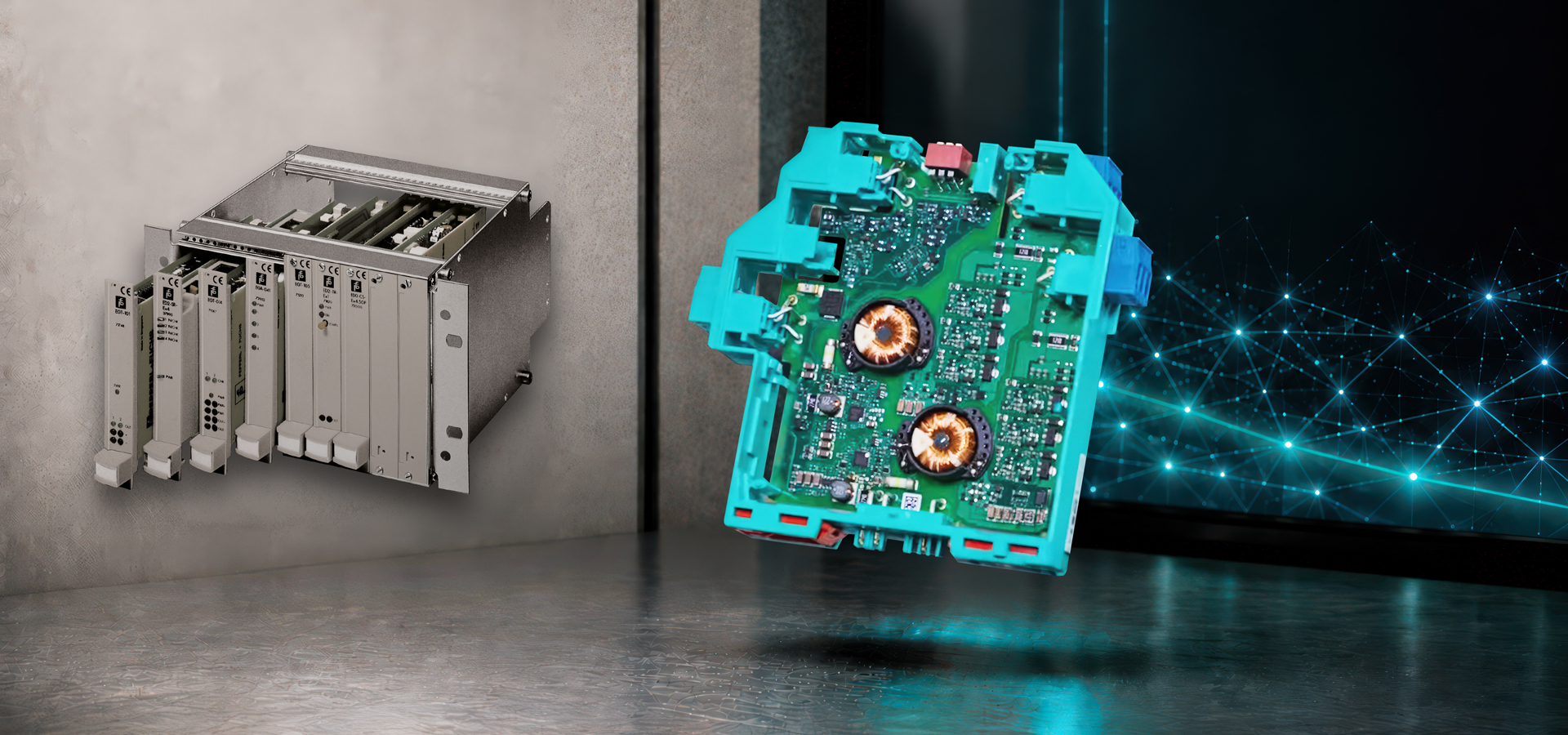
Technologies evolve, requirements change, and new trends emerge. All the more remarkable are solutions that stand the test of time while continuously setting new benchmarks. Interface technology from Pepperl+Fuchs is one of them. In this interview, Michael Kessler explains how the portfolio has evolved over the years and why it remains as relevant today as ever.
Michael KesslerActually, earlier than many people think: The first switch amplifier was developed back in 1956, even before the invention of the inductive proximity sensor two years later by Pepperl+Fuchs. This was made possible by the emerging semiconductor technology of the time. It allowed us to galvanically isolate and safely transmit electrical signals from hazardous areas to non-hazardous areas for the first time. That was essentially the birth of industrial interface technology.
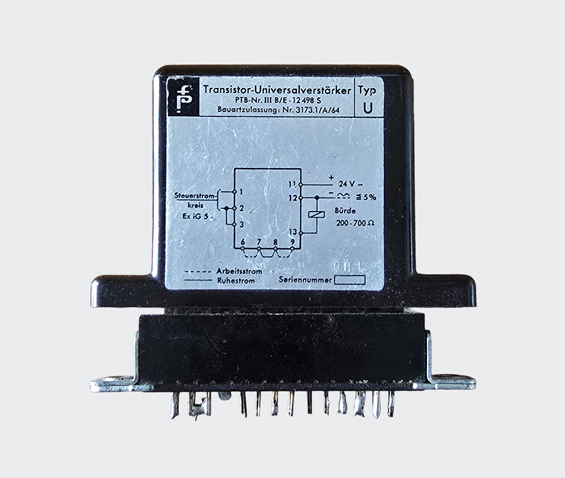
A look back at the beginnings: Decades ago, devices such as the Type U transistor universal amplifier laid the foundation for what has evolved into today’s Interface portfolio.
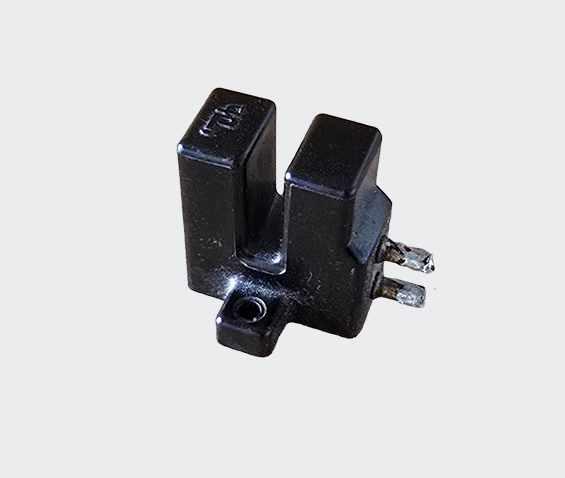
Small in size, big in impact: Historic components such as this slot sensor illustrate the rapid evolution of industrial electronics over the decades. Today, Pepperl+Fuchs offers more than 70 different devices.
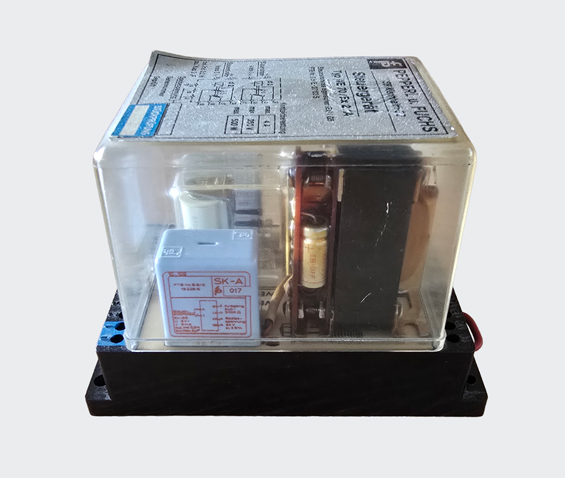
Safety as a guiding principle: With control units such as the WE 70/Ex 2, a precursor to today’s switching amplifiers, Pepperl+Fuchs developed early solutions for reliable signal transmission in hazardous areas.
Michael KesslerIn the early years, everything was still true handcrafted work, produced in small quantities here in Mannheim. It wasn't until the 1970s that this evolved into an industrial standard. Around that time, the first systems were also developed that can now be seen as precursors to the K-System and H-System.
Michael KesslerThe K-System emerged from the early DIN rail devices and later became our most important interface system. In parallel, there were the Eurocards—the rack-mounted modules that were particularly popular in the chemical industry. Later, the H-System was added, which offers particularly convenient wiring with termination boards. This made the connection between the control system and the interface level significantly more efficient.
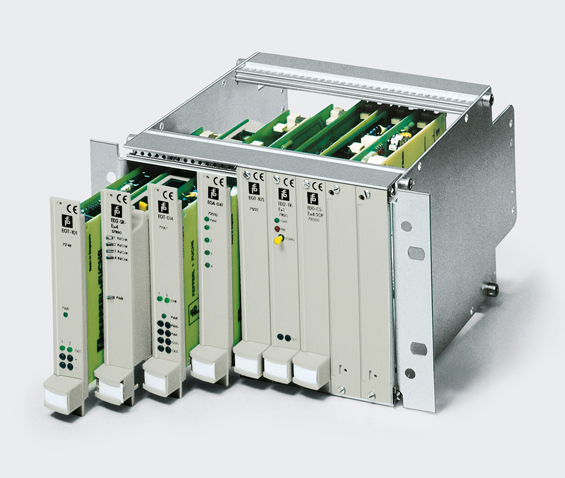
Modular Eurocard system from Pepperl+Fuchs. Since the 1970s, systems like these have been shaping signal processing and explosion protection in process automation.
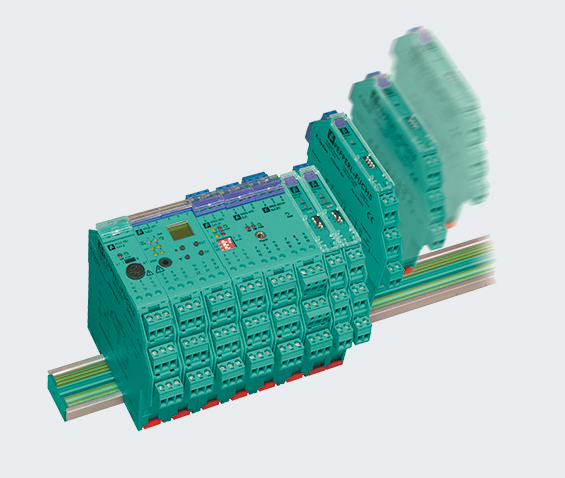
The K-System marked the transition from rack-based Eurocard systems to a new generation of modular, DIN-rail-mounted interface solutions for signal processing and explosion protection.
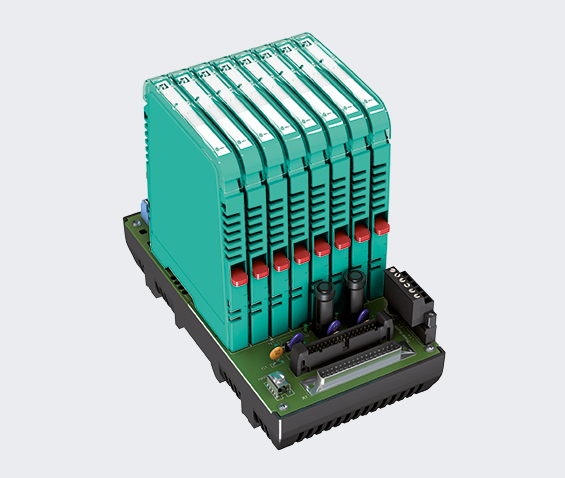
From the first H-System motherboards to today’s termination boards: For decades, the H-System has enabled the efficient integration of field signals into process control systems using system-specific connectors, eliminating the need for extensive point-to-point wiring.
Michael KesslerThis is due to the robust design and the philosophy with which we develop: We always ensure that a new device remains compatible with its predecessor. This allows a plant to be operated safely for decades. We have products in the field that have been working reliably for 30 years—and we still generate considerable sales with them annually. This shows how durable our technology is and the long service life of our customers' plants.
Michael KesslerIn the past, the main focus was on explosion protection. Today, it's also about efficiency, compact design, and sustainability. We are developing devices that are increasingly universal, meaning they can cover multiple functions. At the same time, we are reducing power loss, making these devices smaller and more energy-efficient.
Michael KesslerYes, but in a very natural way. Greater efficiency automatically leads to greater sustainability. When we make a device more compact, we have to design it to be more efficient, otherwise heat dissipation in the control cabinet becomes a challenge. This lowers energy consumption and CO₂ emissions while also reducing operating costs for the customer. For us, sustainability and economic efficiency go hand in hand.
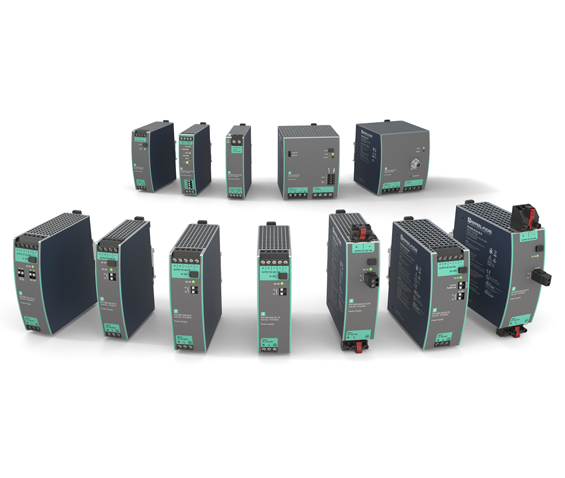
Michael KesslerA good example is our PS1000 power supply series. In a recent project, calculations by our product specialists showed that a customer could save around 100,000 euros over a ten-year operating period in their plant with our solution compared to a similar device, due to its very high efficiency. That is sustainability that pays off, and it made the customer's decision for our devices easy.
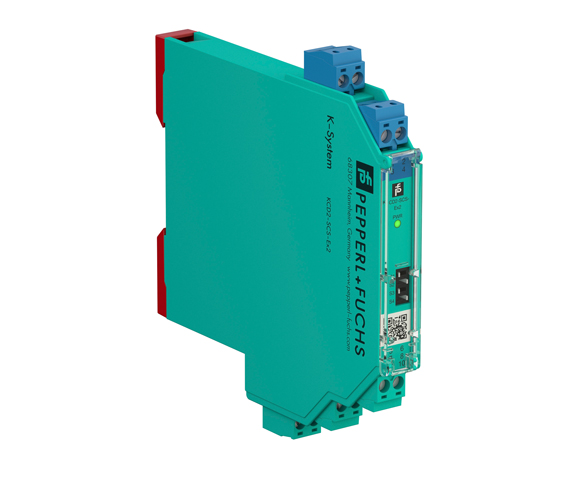
Michael KesslerIt means that a single device can now solve multiple applications. Our KCD2-SCS-Ex2 smart transmitter power supply, for example, transmits analog signals in both directions—previously, you needed two devices for that. This saves space, costs, and significantly simplifies spare parts inventory.
Michael KesslerNot so fast. Of course, in a fully digitized plant, Ethernet-APL replaces classic interface technology because the signals are already transmitted digitally there. But the reality is different: most plants are brownfield plants. In these, digitalization can be easily retrofitted, for example, with HART communication via our HART Multiplexer. This allows customers to capture additional condition data from the plant without having to renew their entire infrastructure.
Modern interface technology: The KCD2-SCS-Ex2 Smart Transmitter Power Supply enables bidirectional transmission of analog signals with a single device, reducing panel space, costs, and spare parts inventory requirements.
Efficiency meets sustainability: The efficient PS1000 power supplies make a positive contribution to sustainability and a company’s carbon footprint.
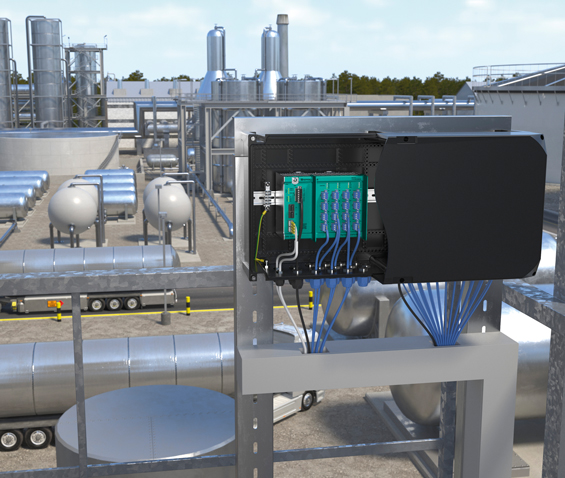
Digital signal transmission for new and brownfield plants: The Pepperl+Fuchs Ethernet-APL Rail Field Switch enables fast, direct, and barrier-free access to field devices in hazardous areas up to Zone 0/ Class 1, Div. 1. Different enclosure solutions offer seamless integration.
Michael KesslerAbsolutely. Interface technology is the backbone of many process plants, and it will remain so for a long time. We are continuously investing in this portfolio, optimizing existing devices, and developing new ones. Our customers can be sure: Interface products from Pepperl+Fuchs will still be around in twenty years—just more efficient, more compact, and more sustainable.
Michael KesslerI am fascinated by the fact that we develop products that last for generations and are sometimes in operation for 30 years! We are proud that our technology works reliably in the background—day after day, year after year. And yet, we continue to drive innovation, in the pioneering spirit of our founders. This is how we continue writing the story of interface technology—with the same passion for progress that has defined Pepperl+Fuchs from the start.
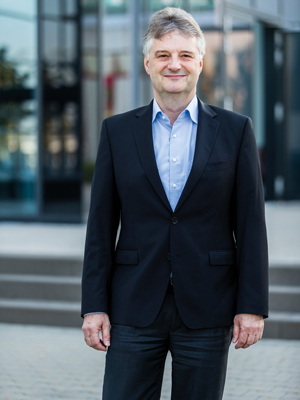
Over a period of more than 30 years, Michael Kessler has shaped the development of interface technology at Pepperl+Fuchs, the product portfolio that is regarded in process automation as a benchmark for safety, efficiency, and reliability. Since the beginning of the year, he has been leading worldwide development at Pepperl+Fuchs.

Watch video
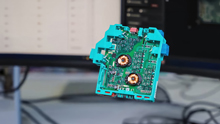
Safety above All. Interface Technology from Pepperl+Fuchs
Learn more

Interface Technology from Pepperl+Fuchs
With seven decades of experience, Pepperl+Fuchs is one of the pioneers of industrial interface technology. The K-System and H-System are used worldwide in the process industry and stand for safe signal transmission, intrinsic safety, and longevity. Thanks to continuous development and innovative approaches—for instance, on topics such as compactness, energy efficiency, and sustainability—interface technology remains a central element of Pepperl+Fuchs' automation solutions.
> Learn more: Interface Technology for Process Industry Applications